← back
Kindred Instant — Eldrazi · M3C #33 · rare
Eldritch Immunity
$7.18
versions · 1 printings
format pulse
- standard not legal
- pioneer not legal
- modern not legal
- legacy legal
- vintage legal
- commander legal
- pauper not legal
EDHREC #1972
price · last 90 days
collecting price history — 0 points so far
prices are estimates, never offers · buy links may earn affiliate commission — your price never changes · source: nightly catalog snapshots
runs well with
all versions
every printing — same card, different shelf price · click one to view it
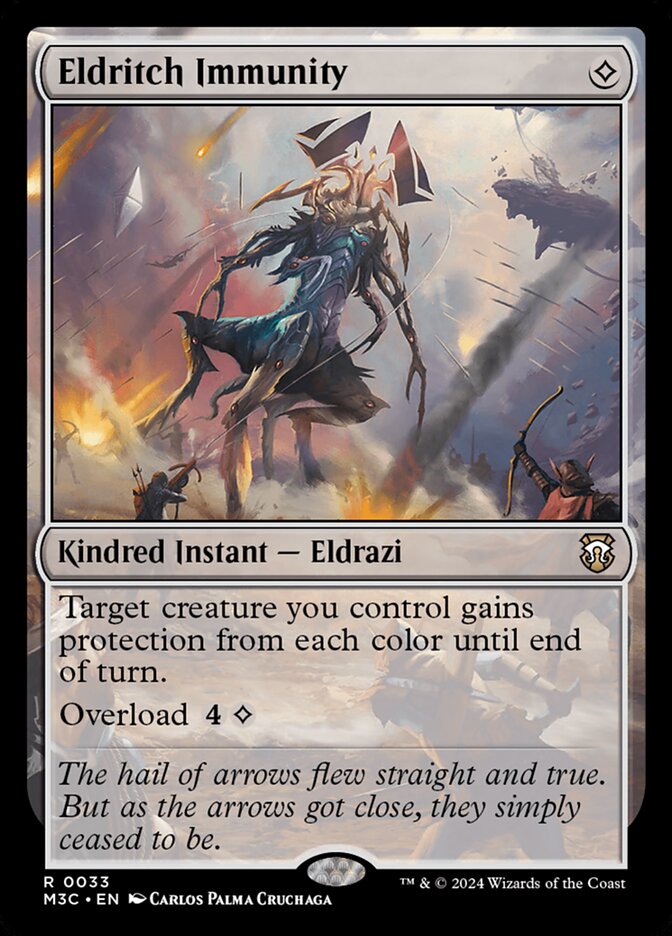
Target creature you control gains protection from each color until end of turn.
Overload {4}{C} (You may cast this spell for its overload cost. If you do, change "target" in its text to "each.")
rulings
- 2024-06-07Overload doesn't change when you can cast the spell.
- 2024-06-07If you don't pay the overload cost of a spell, that spell will have a single target. If you pay the overload cost, the spell won't have any targets.
- 2024-06-07Kindred is a card type that allows noncreature cards to have creature types. For example, Echoes of Eternity is an Eldrazi (although not a creature) while on the battlefield and an Eldrazi card (although not a creature card) in zones other than the battlefield.
- 2024-06-07While it appears only on cards that already have other card types, kindred is a card type and will be counted by effects that refer to the number of card types among cards in a zone.
- 2024-06-07If you are instructed to cast a spell with overload "without paying its mana cost," you can't choose to pay its overload cost instead.
- 2024-06-07Effects that cause you to pay more or less for a spell will cause you to pay that much more or less while casting it for its overload cost, too.
- 2024-06-07Because a spell with overload doesn't target when its overload cost is paid, it may affect permanents with hexproof or with protection from the appropriate color.
- 2024-06-07To determine the total cost of a spell, start with the mana cost or alternative cost you're paying (such as an overload cost), add any cost increases, then apply any cost reductions. The mana value of the spell is determined by only its mana cost, no matter what the total cost to cast that spell was.